

















Let's Talk Business
Schedule a free consultation and let our experts help your business thrive in the digital world.
Contact Us →For the third time, we've compiled our annual list of top UX agencies. However, unlike previous years, 2026's selection marks a fundamental shift: the era of competing solely on aesthetics is over.
Why 2026 is different
Stunning mockups and pixel-perfect prototypes no longer guarantee success. Companies investing money in a redesign understand this is a business decision, not an aesthetic one. They expect concrete metrics, measurable ROI, and agencies that truly understand their strategic challenges. As AI tools democratise design execution, agencies can no longer compete solely on visual polish. The standouts now prove their value through quantifiable impact on revenue, conversion, and retention, combined with deep domain expertise that transforms business problems into design solutions.
How we selected these agencies
This analysis evaluated 50+ UX design agencies globally across five key criteria:
Industry recognition: Presence in Clutch Top 100, major design award nominations (iF Design, Red Dot, Webby), peer citations in industry publications
Measurable outcomes: Documented case studies showing specific business metrics (conversion rate improvements, revenue impact, NPS scores)
Team scale & expertise: Minimum 20+ design specialists; demonstrated depth in at least 2-3 industry verticals or capabilities
Geographic diversity: Intentional inclusion across continents to reflect the global distribution of UX talent in 2026
Specialisation evidence: Vertical expertise or unique capability claims validated through portfolio work and client testimonials
Agencies were evaluated holistically across these dimensions rather than ranked by a single metric. This list reflects the agencies that consistently appear in industry discussions, search results, and our research as of January 2026. The order doesn't imply strict ranking but rather represents different approaches to excellence in UX design.
Who this guide is for
We have prepared this analysis for:
CTOs, VPs of Product, and Product Directors evaluating UX agency partners for strategic projects
Marketing and Digital leaders planning redesign initiatives with budgets from €75K to €500K+
In-house design teams seeking specialised external partners in fintech, e-commerce, or enterprise sectors
Business leaders are comparing agency capabilities, team structures, specialisations, and pricing models
Flying Bisons
Founded: 2016, Poland
HQ: Warsaw, Poland & Riyadh, Saudi Arabia
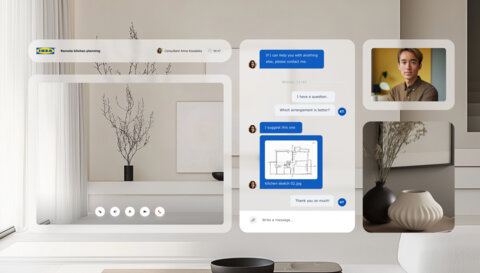
Major clients: Enterprise and government leaders across Europe and MENA in retail, banking, telecom, healthcare, and public sector e.g. Saudi Aramco, KFC, Ikea, Booksy, Takamol, Bank Pekao, Carrefour
Best for:
Organizations requiring strategic design partner with dual European and MENA market expertise
Regulated industries (finance, healthcare, government, telecom) where compliance meets design needs
Cross-regional operations spanning Europe and Middle East
Enterprise-scale projects in retail, e-commerce, banking, and public sector
We are one of the few agencies with proven expertise spanning Europe and the Middle East – ideal for cross-regional operations or MENA market entry strategies. Operating from Warsaw and Riyadh with a portfolio of 300+ products launched across retail, e-commerce, banking, telecommunications, healthcare, and public sector clients. This track record earned us the #7 overall and #1 in UX/UI Design spot on Clutch's 100 Fastest-Growing Companies of 2024, with a 4.9/5 rating across 43 reviews.
We coined the term "Strategic Design & Implementation" to describe what we actually do: connect design decisions directly to revenue growth, operational efficiency, and board-level KPIs. Our work doesn't just improve experiences – it moves metrics that executives care about.
Read our Strategic Design Manifesto →Schedule a free consultation and let our experts help your business thrive in the digital world.
Contact Us →Frog Design
Founded: 1969, Germany
HQ: San Francisco, California
Major clients: Audi, Porsche, Xiaomi, UNICEF, Pfizer, Coca-Cola
Best for:
Organisations seeking innovative design that challenges conventions while delivering business growth
Digital transformation initiatives requiring both strategic vision and execution capability
Consumer product companies and enterprise markets
Emotion-driven interfaces balanced with measurable business outcomes
Another fixture on our list since 2023, Frog Design operates multiple studios worldwide and employs more than 500 specialists across UI/UX design, digital transformation, and product development. They describe themselves as rebellious, challenging conventional design approaches while maintaining strategic partnerships with clients.
Frog creates emotion-driven interfaces that balance aesthetic quality with business growth. They evolved from an industrial design focused on furniture and hardware into a full-service digital transformation partner. Their work combines rich visual design with business strategy, helping clients navigate complex transformation projects.
Their over 55 years of experience positions them as one of the industry's most established players, yet they continue to prioritise innovation and creative risk-taking in their approach to client challenges.
IDEO
Founded: 1991, USA
HQ: Palo Alto, California
Major clients: HBO, American Express, Swarovski, Samsung, Ford
Best for:
Enterprise transformation projects requiring design thinking methodology
Comprehensive initiatives combining brand experience with measurable business outcomes
Organizations undertaking significant business model transformations
Companies where design serves as strategic business lever with demonstrated revenue impact
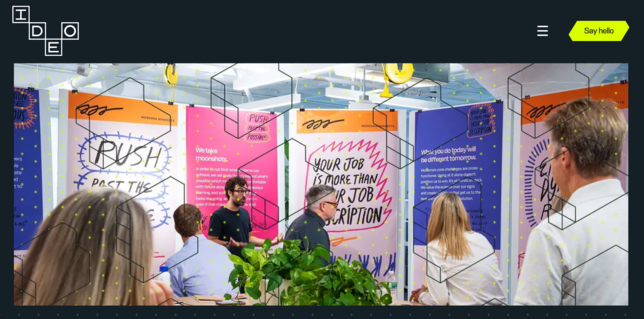
IDEO has offices globally and, as they themselves acknowledge, did not invent design thinking, but they have become known for practising it and helped bring it to the business world. One of IDEO's founding companies designed Apple's first commercial mouse for the Lisa and Macintosh. They employ over 500 interaction design experts who work across strategic UX and business transformation projects. One notable engagement involved a Peruvian conglomerate, where IDEO's work was part of a transformation that led to revenue growth from $2.9 billion to $8.5 billion.
They emphasise exhaustive analysis of user needs and behaviours, using agile and collaborative design processes. IDEO prioritises prototyping and testing to ensure a seamless user experience. Their approach positions UX as both an art form and a strategic business lever, making them particularly suitable for enterprises seeking comprehensive transformation initiatives that combine brand experience with measurable business outcomes.
Designit
Founded: 1991, Denmark
HQ: Aarhus, Denmark
Major clients: Google, Lufthansa, Sephora
Best for:
Growth-stage startups requiring scalable design systems and design foundations
Enterprises seeking service design expertise
Collaborative co-creation processes involving multiple stakeholders
Organisations needing both creative innovation and systematic execution backed by global resources
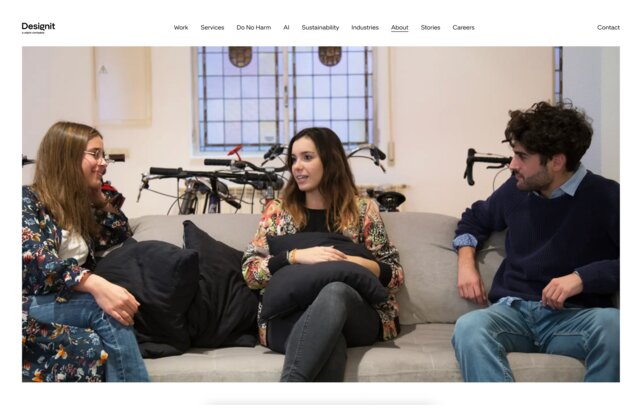
Designit ranks among the world's largest UX agencies and became part of Wipro, an Indian multinational corporation, in 2015. They've been recognised as one of the best options for growth-stage startups. Designit specialises in service design, experience design, brand design, and product design.
They're known for combining UX with design systems and scaled business products, demonstrating strong business growth connections. Their approach emphasises collaboration and co-creation, actively involving clients, users, and stakeholders throughout the design process.
Their focus on innovation and strategic application of technology has made them known for digitally transforming businesses. Their scale and resources allow them to handle complex, multi-faceted projects that require both creative thinking and systematic execution.
UX Studio
Founded: 2013, Hungary
HQ: Budapest, Hungary
Major clients: Wizz Air, Netflix, Google, HBO, UN, BOSCH, Samsung, UEFA, T-Mobile
Best for:
Organisations prioritising research-driven design decisions grounded in user data
B2B SaaS companies seeking dedicated UX teams through a subscription model
Companies requiring an accessible and intuitive interface design
Teams seeking UX training and capability building alongside project work
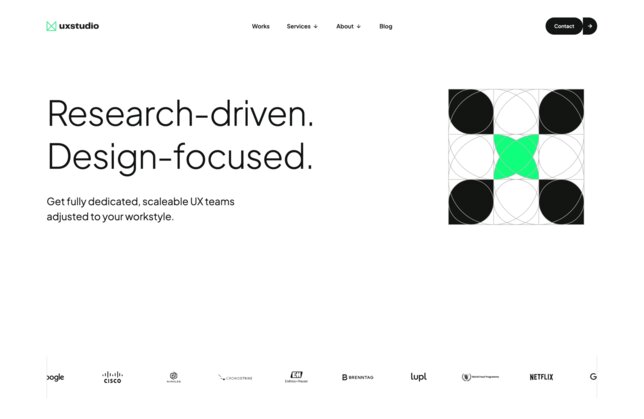
Making its third consecutive appearance on our list, UX Studio, based in Budapest, has grown to over 50 professionals. They hold a 5.0/5 rating on Clutch based on over 40 reviews and offer a subscription-based model tailored for B2B SaaS companies seeking dedicated UX teams.
UX Studio places equal emphasis on UX research and design, prioritising simple and intuitive user interfaces that ensure accessibility. They offer UX research and design training for clients alongside their project work. Their research-driven approach combines craft with measurable business outcomes, earning them a solid reputation despite being smaller than some competitors.
Their commitment to conducting surveys and research whenever possible ensures that design decisions are grounded in user data. UX Studio demonstrates that effective UX work doesn't require massive scale but rather a focused commitment to understanding users and creating interfaces that serve their needs without unnecessary complexity.
Lollypop Design Studio
Founded: 2013, India
HQ: Bangalore, India
Major clients: Paytm Money, Cricket.com, FarmRise, goDutch, Woofys
Best for:
Organisations requiring award-winning design quality combined with operational scale
High-traffic consumer platforms reaching large user bases
Companies needing both innovative design concepts and scaled implementation
Organisations seeking quality standards maintained across different markets and cultural contexts
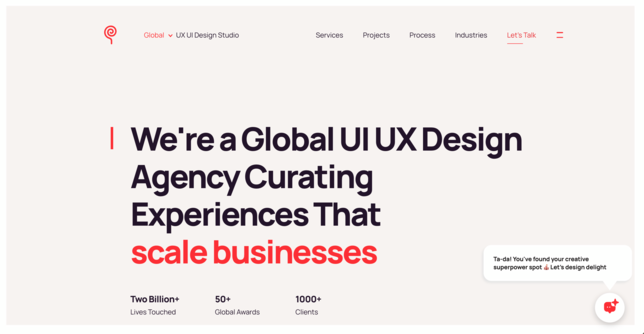
Lollypop Design Studio operates as a global UI/UX design studio with major offices across Indian and US cities, Dubai, and Ho Chi Minh City. They've won over 50 international awards and claim to have touched more than 2 billion lives through their design work. Lollypop combines artistic excellence with operational scale, allowing them to handle projects of varying sizes and complexity.
Their award portfolio demonstrates consistent recognition from design competitions and industry bodies. Their claim of reaching billions of users suggests work on high-traffic consumer platforms or widely distributed products.
Lollypop positions itself at the intersection of creative design and broad business reach, indicating the capability to work both on innovative design concepts and on scaled implementations that affect large user bases. Their global footprint and award success suggest they maintain quality standards across different markets and cultural contexts.
UXDA
Founded: 2015, Latvia
HQ: Riga, Latvia
Major clients: HSBC, Emirates NBD, Garanti BBVA, Bank of Jordan, GCash, Finastra
Best for:
Fintech companies and financial services requiring specialised financial product UX
Banking, payments, investment, and related financial services
Organisations where design decisions impact conversion, trust, and transaction completion
Companies needing a deep understanding of regulatory requirements and security considerations specific to financial products
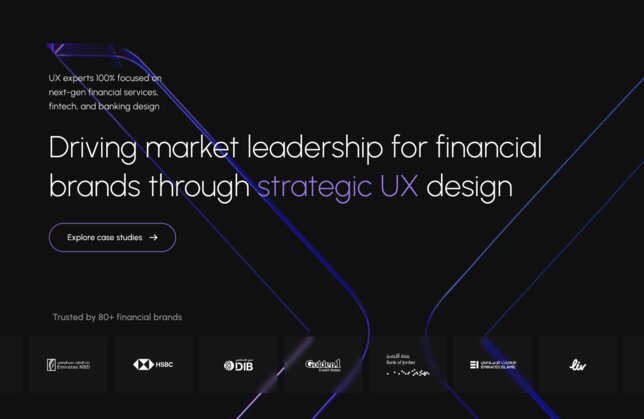
UXDA specialises exclusively in fintech UX design, earning recognition as the most awarded fintech UX design agency. They've won two iF Design Awards, adding to their collection of industry accolades, including Red Dot Design Awards and London Design Awards. According to Clutch reviews, UXDA maintains an NPS (Net Promoter Score) of 81 points, matching the level of Apple, Amazon, and Netflix.
Their domain focuses on financial technology, positioning them as experts in the specific challenges of designing for banking, payments, investment, and related financial services. Their specialised approach allows them to develop deep expertise in regulatory requirements, security considerations, and user behaviours specific to financial products.
UXDA business growth relevance comes from understanding how UX decisions directly impact conversion, trust, and transaction completion in fintech contexts. UXDA represents a trend toward vertical specialisation in the UX industry, where agencies develop concentrated expertise in specific sectors rather than attempting to serve all industries equally. This focused approach can deliver stronger results for clients within their niche.
Blacksmith Agency
Founded: 2010, USA
HQ: Phoenix, Arizona
Major clients: Coastal Community Bank, VOSS Water, Quali, Alloy, Arizona State University
Best for:
E-commerce and SaaS businesses prioritising conversion optimisation
Organisations treating UX design as a business lever focused on measurable outcomes
Companies seeking quantifiable metrics improvements (conversion rate, user retention, engagement depth)
Businesses requiring data-driven validation of design decisions through analytics and testing
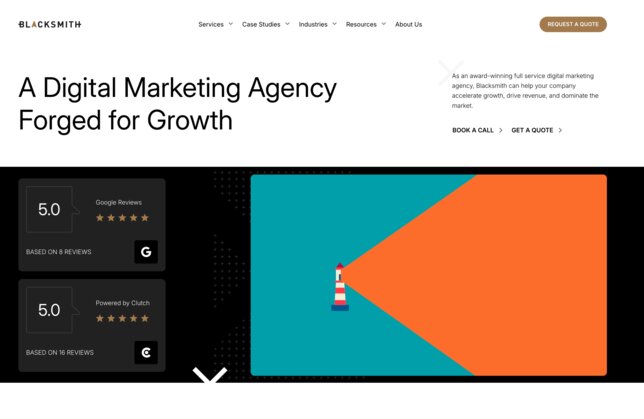
Blacksmith Agency markets itself as an award-winning UI/UX design agency based in Phoenix, Arizona, that focuses on boosting conversion and engagement. They position UX design explicitly as a business lever, emphasising measurable outcomes rather than purely aesthetic considerations. According to Clutch, Blacksmith targets mid-market and enterprise clients with a minimum project size of $50,000, seeking premium conversion optimisation expertise. Their focus on conversion optimisation suggests they work closely with analytics and conduct extensive testing to validate design decisions.
Their approach aligns with the growing trend of tying UX work directly to business metrics, such as conversion rate, average order value, user retention, and engagement depth. This business-focused positioning makes them particularly relevant for e-commerce, SaaS, and other digital business models where conversion optimisation directly impacts revenue.
Blacksmith represents agencies that have moved beyond presenting UX as a qualitative improvement and instead demonstrate quantitative business impact through their design work.
CACI Digital Experience
Founded: 2005, UK
HQ: London, UK
Major clients: Bank of England, Cancer Research UK, Commonwealth Secretariat, Worcester Bosch, Sport England, Arsenal FC
Best for:
UK-based organisations in regulated industries requiring both interface design and technology implementation
Digital transformation initiatives navigating complex regulatory environments
Organisations working across major sectors with different user populations and business models
Companies needing design excellence properly executed in production systems
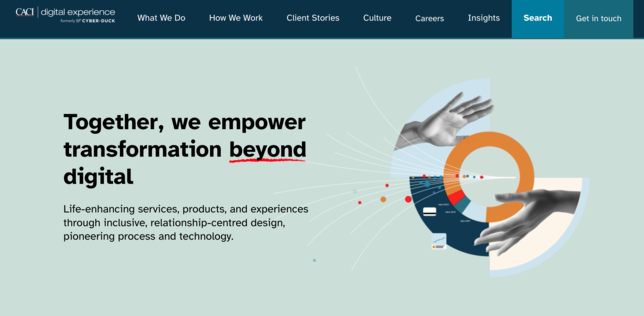
CACI (formerly Cyber-Duck) operates as a UK-based UX and digital transformation agency, with offices in London and Hertfordshire, serving clients across various major sectors. They've won multiple awards, including recognition from Wirehive, BIMA, and Webby competitions. CACI is also part of Deloitte's Technology Fast 500 (EMEA), recognising their growth and market impact.
CACI combines UX expertise with broader digital transformation capabilities, positioning them to handle both interface design and strategic technology implementation. Their work across major sectors suggests experience with different regulatory environments, user populations, and business models.
Their award pedigree from respected industry bodies indicates consistent quality and innovation in their work. CACI exemplifies agencies that bridge the gap between design and technology implementation, ensuring that excellent UX doesn't remain a concept but gets properly executed in production systems. Their UK base and cross-sector experience make them particularly relevant for organisations navigating complex digital transformation initiatives in regulated industries.
Ungrammary
Founded: 2017, India
HQ: Mumbai, India
Major clients: Adobe, Brooks, Kotak Mahindra Bank, Fossil Group, AU Small Finance Bank, Adani Capital, VMware
Best for:
Organisations seeking emerging agency talent with a proven track record in measurable improvements
Companies requiring data-driven design decisions using analytics to guide choices
Businesses focused on conversion rate improvements and usability metrics
Organisations valuing a combination of design excellence with analytical rigour for demonstrable UX ROI
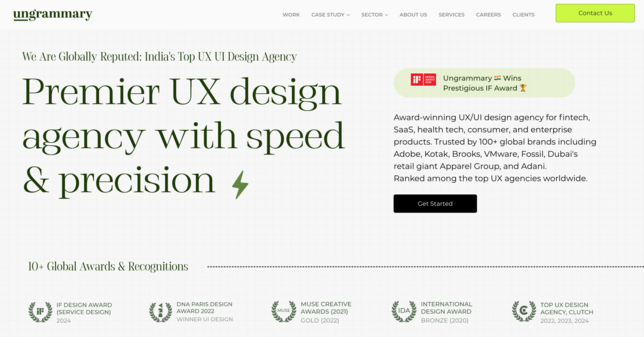
Our list closes with a fast-growing Indian agency that exemplifies the shift toward data-driven UX design. Ungrammary positions itself as a fast-growing UX/UI agency based in Mumbai, founded by two IIT (Indian Institute of Technology) alumni. They've won multiple international awards, including the iF Design Award. Ungrammary's case studies demonstrate measurable improvements in conversion rates and usability metrics, grounding their design work in quantifiable outcomes.
Their rapid growth suggests they have found product-market fit and are scaling their operations successfully. Their focus on measurable improvements aligns with the industry trend toward demonstrating UX ROI rather than relying solely on aesthetic judgment.
Ungrammary represents the emerging generation of UX agencies that combine design excellence with analytical rigour, using data to guide decisions and prove value to clients. Their trajectory suggests they are adapting effectively to market demands for agencies that can deliver both creative solutions and business results.
What we noticed
Three patterns emerge from this year's selection that signal where the UX industry is heading.
Specialisation wins. UXDA's exclusive focus on fintech and UX Studio's subscription model for B2B SaaS show that vertical expertise often trumps horizontal breadth. Agencies that deeply understand specific industries can deliver stronger results than generalists attempting to serve everyone.
Geography diversifies. This list spans eight countries across four continents: Latvia, Hungary, India (2 agencies), Poland, the UK, Denmark, and the USA (2 agencies). While Silicon Valley once dominated design thinking, today's strongest agencies emerge from Budapest, Mumbai, Riga, Warsaw, and Phoenix. Remote work and global collaboration have democratized access to world-class UX talent, with clients increasingly prioritising capability and cultural fit over geographic proximity.
Metrics became mandatory. Seven of ten agencies explicitly emphasise measurable outcomes, conversion optimisation, or quantifiable ROI. The shift from "it looks good" to "it converts better" reflects clients demanding proof that design investments drive business results. UXDA's NPS of 81 and Blacksmith's $50,000 minimum signal that premium pricing follows proven performance.
Conclusion
The UX design landscape in 2026 rewards agencies that combine craft with measurable impact. Whether through specialised domain expertise, global scale, or data-driven approaches, the strongest agencies demonstrate clear connections between design decisions and business outcomes.
The question isn't whether your next redesign will be beautiful. It will be. The question is whether your agency partner can prove it will perform. Choose a UX partner who asks about your conversion funnel before they ask about your brand colours.


