






















Kamil Tatol
-
Dec 16, 2025
-
10 min read
- 01 . Intro
- 02 . The Golden Era
- 03 . The Tipping Point - Fall 2022
- 04 . Swimming Naked
- 05 . Situation Changed. The Overruling Principles Didn’t.
- 06 . New Market Dynamics
- 07 . What Matters Now - ROI, Outcomes, Relevant Success Stories, Trust
- 08 . The Future of B2B Services
- 09 . Be So Good They Can't Ignore You
- 10 . Flying Bisons' Journey
- 11 . The Road Ahead - From Easy Mode to Hard Mode
- 12 . Conclusion - The Wave Is Gone, The Work Begins
- 13 . Bibliography
Introduction
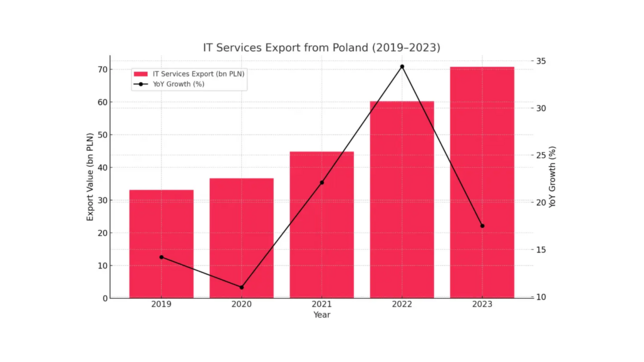
For over a decade, Poland's IT industry was our country’s crown jewel. It became the fastest-growing export sector, employing hundreds of thousands of specialists and powering digital transformation from Berlin to Silicon Valley. By 2023, Polish IT exports reached 70.7 billion PLN[1] - more than double the 33.1 billion PLN from 2019[1]. To put that in perspective: Poland now exports more IT services than Japan or South Korea, remarkable for a country finding its place in the global economy just 30 years ago.
For founders and CEOs, it felt like being in the right place at the right time. Growth was constant, demand endless, success inevitable.
That illusion broke in 2022.
Since then, the sector has faced its first real stress test in over a decade. Job postings fell by nearly 23% between 2023 and 2024[21,23]. Junior opportunities shrank to less than 5% of the market[21,23]. Startup funding in Poland collapsed 42% in a single year, dropping from 3.6B PLN to 2.1B PLN[13,14,16]. Margins that once seemed effortless evaporated as currency rebounded and inflation hit a 25-year high of 18.4%[17,18].
This isn't a eulogy for Polish IT - the sector remains strong and full of potential. But the rules have changed. I'm writing this article to examine what happened, what it revealed, and what comes next.
I write not as an outside analyst, but as someone who lived it: as a CEO, advisor, and participant in projects across Europe and the Middle East. If you lead a software house in Poland today, you don't need another pep talk. You need clarity. And clarity starts with telling the story of our industry as it really is - not as we once hoped it would always be.
Schedule a free consultation and let our experts help your business thrive in the digital world.
Contact Us →The Golden Era
For almost two decades, IT was "the industry" in Poland. The one every ambitious student wanted to enter, every foreign client wanted to buy from, every policymaker showcased as proof Poland had moved from manufacturing to high-value knowledge exports.
The numbers justified that pride. Between 2010 and 2022, Polish IT exports grew nearly 20% annually[1,4] - more than twice as fast as other service sectors. In 2019, the sector exported 33.1 billion PLN[1]; by 2023, it reached 70.7 billion PLN[1]. IT now accounts for 13% of all Polish service exports[2], making it critical to national growth.
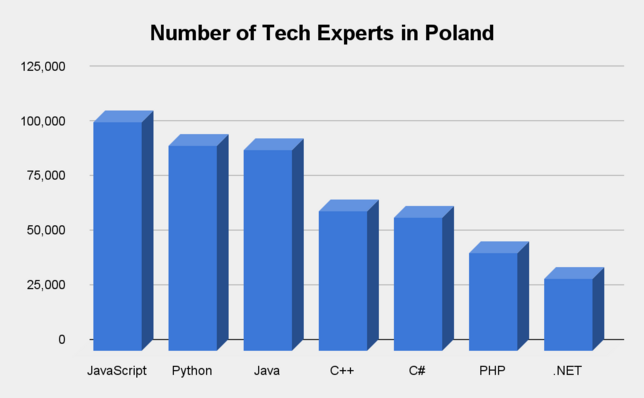
The talent base was equally impressive. Poland built Central and Eastern Europe's largest IT workforce - 500,000 to 850,000 professionals[5,6,8] across 60,000+ IT companies[5,6,7] forming a dense, dynamic ecosystem.
Why did global clients flock here? The formula was simple:
World-class talent. Polish engineers earned a reputation for technical excellence, consistently ranked among Europe's best developers.
Cost-quality advantage. Poland offered the "sweet spot" of outsourcing - professional, reliable, and affordable without cultural friction.
Pandemic tailwinds. COVID-19 accelerated digital adoption worldwide. Remote delivery became the norm, geography mattered less than reliability, and Poland thrived.
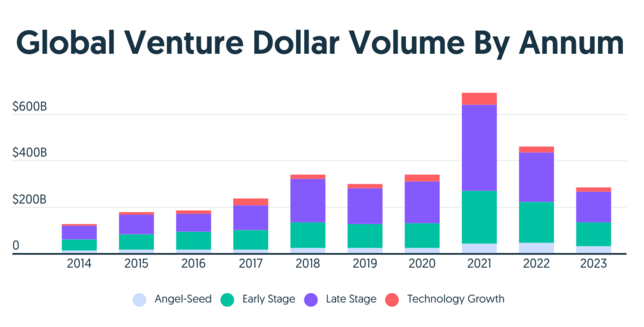
Capital abundance. Global venture capital hit $640B in 2021[9]. Flush startups became aggressive buyers of IT services, driving demand for rapid development and scaling.
It was a decade of abundance. Clients competed for talent. Agencies staffed projects at will. Even mediocre firms grew just by having developers available. I remember asking young people why they wanted to join IT. The most common answer wasn’t “because I love technology” but “because there’s money.” Some even admitted openly that they didn’t care for coding itself. They saw IT as a shortcut to a good salary, and for much of the 2010s and early 2020s, they weren’t wrong.
The market seemed destined to last forever.
Until it didn't.
The Tipping Point - Fall 2022
If there was a single moment symbolizing the golden era's end, it was fall 2022 when USD/PLN hit 4.99[1] - briefly crossing the symbolic 5.0 threshold.
For exporters, it looked like a dream: bill in dollars, pay salaries in polish złoty, watch profits explode. Some firms reported 40%+[1] operating margins. In boardrooms across Poland, leaders convinced themselves this was the "new normal."
It wasn't. What looked like a perfect storm of favorable conditions was really just a perfect wave. And like every wave, it eventually broke - exposing who could truly surf versus who'd been carried by momentum.
Everything shifted at once:
Venture capital collapsed. Global funding fell from $640B in 2021 to ~$214B in 2023[9,10,11]. Polish startup investments shrank 42% year-over-year[13,14]. For many software houses, startups had been their biggest clients - and suddenly that pipeline dried up.
Clients reprioritized. The "growth at all costs" ended. Boardrooms stopped chasing vanity metrics and demanded profitability. Exploratory budgets vanished. Procurement cycles stretched from weeks to quarters.
Demand softened. New projects slowed, many cancelled outright. Sales cycles doubled. Appetite for experimental initiatives evaporated.
Talent oversupply emerged. For the first time in years, employers held the upper hand. IT job ads fell 23% year-over-year[21,23]. Average roles attracted 44 CVs in 2024[25], up from ~40 in 2023. Small firms cut staff ~26% on average[23], large ones ~12%. Juniors found themselves frozen out.
Currency normalized. By early 2023, polish złoty strengthened again, erasing the windfall. Coupled with 17.9% inflation - the highest in 25 years[17,18] - the FX advantage became a painful margin squeeze.
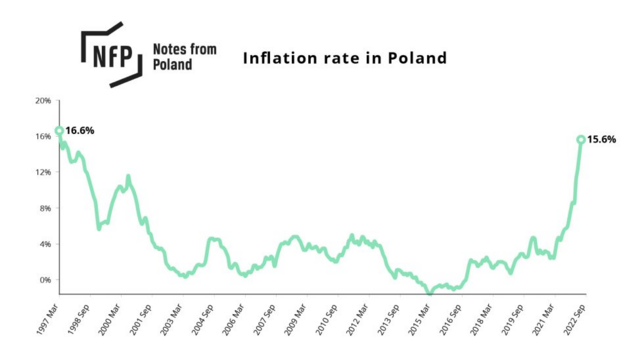
Within twelve months, the industry shifted from euphoria to survival. For some it felt like a crash, for others like betrayal. But it was actually normalization. The windfall conditions propping up unsustainable business models were gone.
Swimming Naked
The wave carried everyone. Cheap capital, global demand, and pandemic acceleration created conditions where even mediocre companies thrived. But when the tide went out, the underlying pathologies of the industry became impossible to ignore.
Warren Buffett said: "Only when the tide goes out do you discover who's been swimming naked." In 2022-23, Polish IT learned how many were.
The excesses were obvious to insiders:
Developers sold like commodities. Many firms reduced professionals to interchangeable "resources." Clients weren't buying outcomes - they were renting hours.
Software built for budgets, not problems to be solved. Projects started not because they solved business problems, but because budgets existed. Industry observers estimate much of the 2018-2021 boom software was abandoned by 2023.
Margin stacking. Single developers were commonly subcontracted through multiple intermediaries, each taking their cut. End clients paid rates bearing no relation to actual value delivered.
Over-hiring and "benches." Companies carried idle engineers waiting for contracts. In 30-40% annual growth years, this was tolerated. When demand slowed, those benches became crushing liabilities.
Multiple employment. With soaring salaries and insatiable demand, some engineers openly held multiple full-time roles, splitting output across employers.
Time & Material inefficiencies. T&M contracts encouraged delays and ballooning budgets. Despite rising rates, average net margins in Polish software houses typically ranged around only 5-20%, showing how inefficiency consumed profits.
COVID distortions. The pandemic pulled years of digital spending forward in just months. The correction was inevitable.
The correction didn't destroy the industry - it forced maturation. What many experienced as "crisis" was the market resetting to fundamentals: supply and demand finding equilibrium, value becoming measurable again, clients remembering that paying for hours isn't paying for results.
Situation Changed. The Overruling Principles Didn’t.
The external environment flipped overnight. What used to be hard - hiring talent - is now easy. What used to be easy - acquiring big-budget clients - is now hard.
But the fundamentals? They didn't change at all.
Jeff Bezos observed that strategy should be built not on what changes, but on what doesn't. That’s where stability lies. For professional services companies, the immutable truths are simple:
It's a service, not a product. Clients wants to buy outcomes, instead of code lines.
It has to be truly “professional”. Specialized, accountable, delivered with expertise.
ROI is the only reason to buy. Every client makes a bet: spend 1 million, expect multiples back in profit within a defined horizon.
Everything else is noise.
During boom years, these truths were ignored. Time & Material contracts stretched endlessly. Software was delivered, but business value wasn’t. Developers were sold by the hour while accountability evaporated. Even at peak growth, observed average net margins in Polish software houses hovered at just 5-20%. Proof that inefficiency, not fundamentals, ruled the market.
Yet these fundamentals are timeless. Law firms don't bill hours for billing's sake - they win cases. Architects aren't paid for drawings - they shape spaces. Consultants aren't valued for slide count, but for measurable business impact.
IT is no different. Clients hire us because we can do what they cannot. They stay only if value delivered outweighs cost. Period.
Everyone wants a good deal. And in professional services, a good deal has only one definition: the best value-to-cost ratio among available options. Nobody wants “cheap and bad.” Nobody wants “expensive and mediocre.” The market always balances on this equation - and it always will.
In the last decade, extreme demand allowed the industry to break this rule temporarily. Not anymore. With abundant talent, cautious clients, and AI reshaping expectations, fundamentals are back at center with ROI as the standard by which every project is judged.
And it’s not a crisis, but rather return to sanity.
New Market Dynamics
For the first time in years, Poland's IT labor market isn't ruled by employees. The pendulum has swung decisively.
IT job postings fell ~23%[21,23] between 2023 and 2024. Where roles once drew five CVs, now they attract over forty[25]. Less than 5% of openings[21,23] are entry-level. Juniors, courted aggressively just years earlier, are almost completely frozen out.
The same reversal appears in sales. A decade ago, junior business developers could land multi-million-złoty contracts. Clients were desperate, budgets abundant, almost anyone could close deals. Those days are gone.
Today's clients expect something else entirely:
ROI over hype. Projects must demonstrate measurable business impact. Tech stacks alone no longer impress.
Outcomes over outputs. Logged hours or delivered features are irrelevant without results.
Trust over transactions. Buyers want to know the people behind proposals - ideally at C-level, not junior sales reps.
Stakes are higher too. Nobody wants to be the executive who signed the wrong partner and paid with their career. Procurement cycles have doubled since 2021. Personal credibility often matters as much as corporate credentials.
This shift is sobering but healthy. The market demands maturity. Reliability, accountability, and long-term value have replaced the fast-and-loose opportunism of boom years.
For software house leaders, this is the defining test. It's no longer enough to boast about headcount or rent developers. It's no longer enough to be the cheapest bidder. What matters now is whether you can look a CFO, CIO, or CEO in the eye and prove that working with you is the smartest bet they can make.
What Matters Now - ROI, Outcomes, Relevant Success Stories, Trust
The rules of the game are clearer than ever. Clients aren't impressed by buzzwords, inflated headcounts, or glossy sales decks. They want three things only:
Strong value-to-cost ratio. Every złoty spent must generate more than a złoty of profit. Not just revenue - profit.
Risk mitigation. No executive wants to gamble on vendors. Procurement cycles that once took weeks now stretch into months or quarters as buyers demand more proof and references.
Trust at the highest level. In B2B services, trust is currency. Clients expect C-level involvement - leaders personally accountable, not sales reps reading scripts.
B2B sales has changed dramatically. Easy transactional selling is gone. Every deal passes through executive-level scrutiny where decision-makers know one bad choice can cost their job.
I remember a prospect telling me: “I have every reason to choose your company. I believe you’re the best. But I won’t be your biggest project. How do I know I won’t be treated as a secondary priority?”
That question stopped me cold. In the past, Flying Bisons was the "młody wilk" - the hungry young wolf outcompeting larger rivals through commitment and personal C-level involvement. Now the fear is inverted: clients worry that as you scale, they'll matter less.
It was a powerful reminder: if you can't win on size, win on dedication. If you can't compete on cost, compete on value.
This is where the market stands:
Nobody wants bad deals
Nobody wants unnecessary risks
Nobody wants to explain to their board that their chosen vendor deprioritized them
Above all: nobody wants to lose their job for hiring the wrong partner.
Schedule a free consultation and let our experts help your business thrive in the digital world.
Contact Us →The Future of B2B Services
Every downturn invites dramatic headlines. In the last two years, I've heard: "B2B services are finished."
They're not. But they are different.
The 2010s outsourcing model - where software houses acted as glorified HR agencies renting developers by the hour - is over. Clients no longer tolerate margin stacking, benches of idle engineers, or Time & Material projects without accountability. That wasn't value creation. It was arbitrage.
What survives is the essence: clients still need expertise they lack in-house. This is why law firms, architectural studios, and consultancies exist. The modern world is too complex for any organization to master everything internally. The same applies to digital.
But expectations have changed:
From capacity to capability. Clients don't want more bodies - they want sharper minds
From outputs to outcomes. Deliverables are irrelevant if they don't move business needles
From execution to advisory. Increasingly, clients want not just software built, but strategic guidance on what should be built and why
And this change is amplified by the most powerful force reshaping our industry: artificial intelligence. McKinsey reported that 75% of global companies used AI in at least one function[26] by 2023. By 2024, 71% were expected to be experimenting with generative AI[27,28] - more than double from just a year earlier. GitHub research shows Copilot can boost developer productivity 55%[30,31,32].
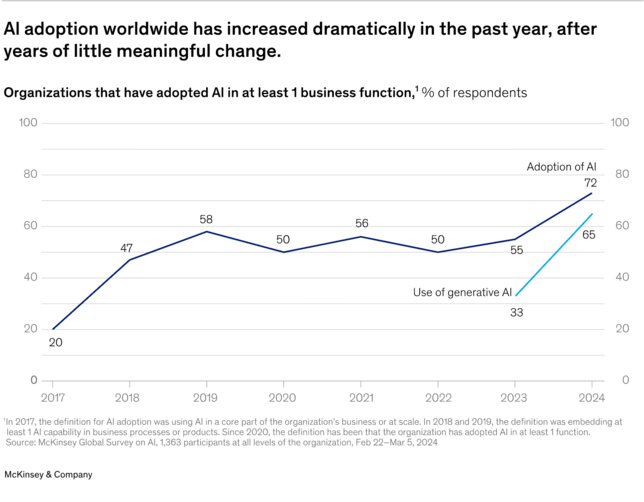
This doesn't eliminate professional services need. But it raises the bar for what "professional" means. If you're still selling raw developer hours in 2025, you're already obsolete.
So no, B2B services aren't dead. They've entered a more demanding era where being average is fatal, and being exceptional is the only survival path.
Be So Good They Can't Ignore You
Cal Newport's famous advice - “Be so good they can’t ignore you” - applies as much to companies as individuals. In today's IT market, where AI erodes commodity work and clients scrutinize every złoty, being "good enough" is decline. The only way forward is becoming unmistakably, undeniably better in your category.
That begins with specialization.
Generalist software houses claiming to do everything for everyone are running out of oxygen. Clients are often more focused and specialized in their industries than the agencies serving them. The only way to win is building expertise deep enough to surpass even the client's own.
Specialization takes many forms:
By sector: banking, healthcare, retail, entertainment
By service: UX research, cybersecurity, data science
By lifecycle: launching products, modernizing legacy systems, optimizing platforms
By technology: React Native, Rust, cloud architectures
By business model: SaaS, marketplaces, subscription platforms
The tighter the fit between your expertise and client problems, the harder you are to ignore.
Specialization pays exponentially. In digital, like sports or music, the difference between "good" and "the best" isn't linear, it's exponential. Forbes data shows the top 100 tennis players don't make 100% more than the rest - they make 1,000% more[34]. The same is true in IT: firms dominating their niche don't earn slightly better margins - they earn multiples.
But expertise alone isn't enough. Business models must support resilience. Chasing one-off projects is like chasing rabbits: you may catch one, but next month you start from zero. Sustainable growth comes from recurring revenue - retainer partnerships, quasi-MRR from long-running engagements, or one-offs evolving into multi-year relationships.
Finally, there's AI. Think of it as the next great wave. For some, it's the killer. For others, the multiplier. McKinsey's research shows firms integrating AI report 20-50% productivity gains[28] in software development. GitHub Copilot users, for example, complete coding tasks 55% faster[30,31,32]. The question isn't whether AI will change IT services - it already has. The question is whether you'll leverage it to deliver 2x ROI, or ignore it and watch margins disappear.
In short: winners of the next decade will specialize deeply, build recurring revenue, and harness AI to deliver outcomes competitors simply can't match.
Flying Bisons' Journey
None of this is theory for me. I've lived it with my team at Flying Bisons. Our journey has been deliberate choices - sometimes contrarian, often uncomfortable - but always rooted in these principles.
When most Polish firms chased US or Western European startups, we took a different path. We focused on the public sector in Central and Eastern Europe, later doubling down on the Middle East. It was slower, riskier, demanded years of relationship-building. But it gave us exposure to long-term projects measured not in vanity metrics, but in impact on millions of citizens.
We built our business model around resilience and ROI:
MRR as North Star. Retainers and quasi-recurring contracts became our foundation. One-offs were only attractive if they could evolve into long-term engagements.
ROI-first philosophy. Our mantra: working with us isn't a cost, it's an investment. If clients spend $1M with us, they should expect multiples back in profit. If we can't deliver that, we shouldn't do the project.
Enterprise focus. Startups are exciting but volatile. Enterprises with proven business models but legacy digital infrastructure are where the biggest ROI potential lies. Helping them modernize has been our sweet spot.
Specialization over breadth. We deliberately narrowed scope to repeatable patterns - specific sectors, technologies, and lifecycle stages where we can become best in class, not just competent.
One experience stays with me. A few years ago, I called a long-term client to say we needed to raise prices over 30%. Inflation had reached 18.4%[17,18], and economics no longer worked. I was convinced we'd lose them. Instead, they responded: "We're not happy, but we can't afford to lose you. The value is still there."
That moment reinforced everything we believe: if you deliver undeniable ROI, clients will stay even when prices rise.
We've made plenty of mistakes. But our strategy has been consistent: play the long game, focus on outcomes, build depth where others chase breadth.
For Polish IT leaders, I'm not saying our path is the only one. But ideas are cheap, execution is hard. Unless execution is anchored in specialization, recurring value, and ROI, you'll find yourself running in place while the industry moves on.
The Road Ahead - From Easy Mode to Hard Mode
The last decade was easy mode. Demand outstripped supply, capital was cheap, clients eager to spend. Simply existing as a Polish software house was often enough to grow.
Those days are gone.
The industry has shifted to medium difficulty - and soon may feel like hard mode. What does that mean?
Competition is no longer about talent access. Developers are abundant. Clients are not. Job postings fell 23%[21,23] while average roles attracted 44 CVs[25]. The bottleneck isn't hiring people - it's winning trust and proving ROI.
Margins won't be gifted by FX. The USD/PLN windfall of 2022[1] is unlikely to return. The złoty has strengthened while inflation eroded purchasing power. Financial discipline must replace currency luck.
AI will rewrite the value equation. By 2024, 71% of organizations worldwide were experimenting with generative AI[27,28]. GitHub Copilot users complete coding tasks 55% faster[30,31,32]. McKinsey found that 17% of companies integrating AI saw at least a 5% EBIT uplift[28]. Clients know this. They expect vendors to integrate AI into delivery, not treat it as an experiment.
Specialization will separate winners from survivors. Generalists drown in normalized markets. Specialists dominate. Firms that can say "We are the best at this specific problem" will beat ten firms claiming they can do everything.
Trust becomes the ultimate differentiator. Procurement cycles have doubled since 2021. Executives will only bet on partners who make them look both smart and safe.
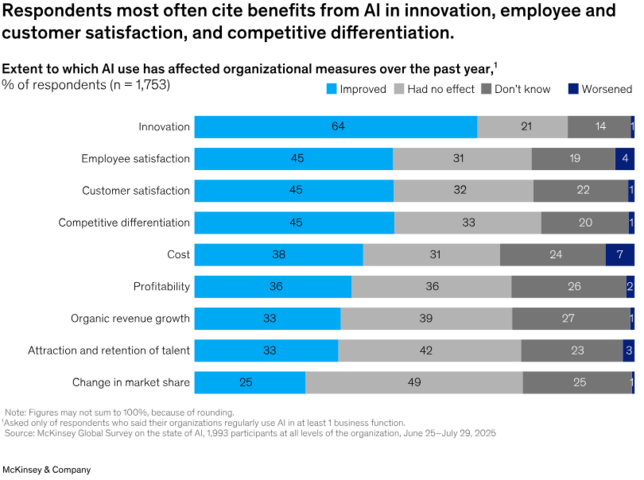
For Poland, this isn't a death sentence. It's graduation. Our IT industry grew up surfing global capital and labor arbitrage. Now it must compete on brains, depth, and outcomes. That's harder, but we're capable of winning - if we embrace the challenge.
The road ahead demands clarity, courage, and consistency. Clarity about who you are and the value you deliver. Courage to specialize and walk away from bad-fit deals. Consistency in building recurring, ROI-driven partnerships.
Easy mode is over. Hard mode is here. And that's where real players are separated from tourists.
Conclusion - The Wave Is Gone, The Work Begins
For over a decade, Poland's IT industry was lifted by a wave. Demand was endless, capital cheap, talent scarce enough that even average companies thrived. Riding the wave was enough.
That era is over.
The golden illusion of infinite growth has given way to new reality: normalized demand, ROI-driven clients, and AI reshaping what "professional services" means. For many, this feels like crisis. In truth, it's the industry finally maturing.
The numbers tell the story clearly. IT service exports more than doubled from 33B PLN in 2019 to 70B PLN in 2023[1], even through global turbulence - proof of enduring strength. But margins, once inflated to 40%+ in 2022[1], have compressed to more sober 10-20%. Growth is still here, but winning rules have changed.
What happens next won't be defined by who rents the most developers or closes the fastest deals. It will be defined by who can:
Deliver measurable return on investment instead of just hours
Build deep specialization rather than shallow generalism
Earn trust at the highest level through accountability and consistency
Harness AI as leverage, not fear it as competition
Shift from chasing one-offs to building recurring, compounding value.
This isn't the end of Polish IT. It's the beginning of its adulthood.
The wave is gone. Now comes the work - harder, slower, but ultimately more rewarding work of building enduring companies, partnerships, and advantages.
Those who embrace this shift won't just survive the new era. They will lead it.
Be so good they can't ignore you.

BIBLIOGRAPHY
Brandsit (2025). "Export of IT services from Poland are breaking records. Will the boom last?" July 22, 2025.
Polish Investment and Trade Agency (PAIH) (2023). "The Information Communication Technology Sector 2023."
Trade.gov.pl (2024). "Export of services as a driving force of Poland's GDP." September 18, 2024.
Trade.gov.pl (2025). "Tripling high-tech exports in the last 15 years." April 14, 2025.
DevsData (2025). "Software Development In Poland: Market Overview For 2025." January 23, 2025.
Newxel (2024). "Why International Companies Attracted to the Polish IT Market." June 20, 2024.
DevsData (2025). "Polish Software Developers: Salaries, Pros, And Cons." April 22, 2025.
Alcor BPO (2025). "Technology and IT Industry in Poland in 2025." October 2025.
Crunchbase News (2022). "Global Venture Funding And Unicorn Creation In 2021 Shattered All Records." January 21, 2022.
Crunchbase News (2023). "Global Venture Funding In Q3 2023 Falls Again Despite Late-Stage Rebound Led By Huge AI Deals." October 3, 2023.
Crunchbase News (2024). "Global Startup Funding In 2023 Clocks In At Lowest Level In 5 Years." January 10, 2024.
KPMG Private Enterprise (2025). "2024 global VC investment rises to $368 billion.” January 2025.
PFR Ventures & Inovo VC (2025). "142 Polish startups raised €493 million – Polish VC market 2024 report." February 7, 2025. Reported by AIN.
OMGKRK (2024). "Polish Startups Report 2023 – Summary, Part 3." March 6, 2024.
Trade.gov.pl (2025). "Poland drives the Startup revolution in Central and Eastern Europe." April 25, 2025.
SeedBlink (2023). "Poland's startup ecosystem: a magnet for international investors." November 9, 2023.
National Bank of Poland (NBP) (2022). "Monetary Policy Council November 2022 Inflation Report." November 2022.
Notes From Poland (2022). "Inflation reaches 25-year high of 15.6% in Poland." July 1, 2022.
Statista (2024). "Inflation in Poland - statistics & facts."
MacroTrends (2024). "Poland Inflation Rate (1971-2024)."
ITCompare.pl (2025). "The State of the IT Industry in 2025 – A Closer Look at the Job Market." June 25, 2025.
ITDS (2025). "2024 IT Job Market Summary: Stabilization & New Opportunities." February 7, 2025.
Poland Insight (2025). "IT Salaries Rise Slightly in 2024 but Fall 20% Short of Expectations, Job Offers Decline by 9%." January 16, 2025.
Euronews Business (2025). "Tech job postings fall across Europe but rise in emerging markets: where are the biggest declines?" November 15, 2025.
Correct Context (2025). "Best advantages of Poland's IT hiring - Grow your Core IT Teams." July 28, 2025.
McKinsey & Company (2023). "The state of AI in 2023: Generative AI's breakout year." August 1, 2023.
McKinsey & Company (2024). "The state of AI in early 2024: Gen AI adoption spikes and starts to generate value." May 30, 2024.
McKinsey & Company (2025). "The state of AI in 2025: Agents, innovation, and transformation." November 2025.
G2 Learning Hub (2025). "Global AI Adoption Statistics: A Review from 2017 to 2025." May 28, 2025.
GitHub Blog (2024). "Research: quantifying GitHub Copilot's impact on developer productivity and happiness." May 21, 2024.
Paasche, H., Ziegler, A., et al. (2023). "The Impact of AI on Developer Productivity: Evidence from GitHub Copilot."
GitHub Blog (2023). "The economic impact of the AI-powered developer lifecycle and lessons from GitHub Copilot." May 14, 2023.
Communications of the ACM (2024). "Measuring GitHub Copilot's Impact on Productivity." May 2, 2024.
Forbes. Referenced for tennis player earnings comparison (top 100 vs rest earning 1,000% more); a commonly cited statistic in sports economics literature
- 01 . Intro
- 02 . The Golden Era
- 03 . The Tipping Point - Fall 2022
- 04 . Swimming Naked
- 05 . Situation Changed. The Overruling Principles Didn’t.
- 06 . New Market Dynamics
- 07 . What Matters Now - ROI, Outcomes, Relevant Success Stories, Trust
- 08 . The Future of B2B Services
- 09 . Be So Good They Can't Ignore You
- 10 . Flying Bisons' Journey
- 11 . The Road Ahead - From Easy Mode to Hard Mode
- 12 . Conclusion - The Wave Is Gone, The Work Begins
- 13 . Bibliography


